
Academic Competitions
Johnathan Academy is an official certified center for major mathematics, science, and computing competitions.
Register online for any of our contests: choose one or several, and upload your documents once.
Register →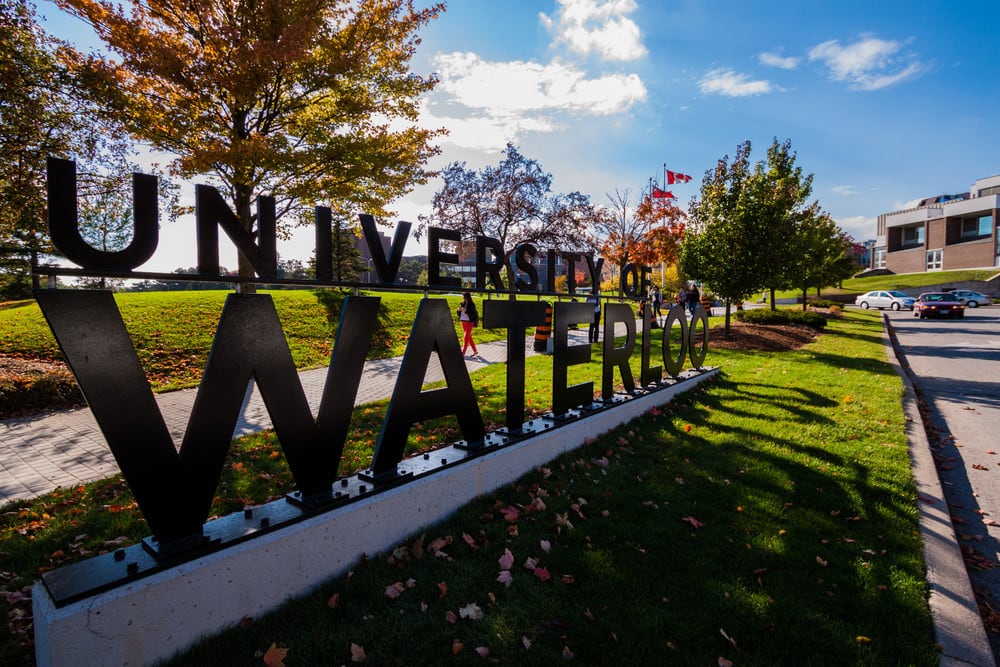
Waterloo / CEMC
Run by the University of Waterloo's CEMC for Grades 9–12: Pascal / Cayley / Fermat and Fryer / Galois / Hypatia (Grades 9 / 10 / 11), Euclid (Grade 12), CIMC / CSMC, the CCC programming contest, and the Avogadro and Chem 13 News chemistry exams.
US Contests / AMC
Run by the MAA: AMC 8 for Grade 8 and below (middle-school math); AMC 10 / 12 for Grade 10 / 12 and below (high-school algebra, geometry, number theory, counting and probability; no calculus).

Canadian Mathematical Society (CMS)
Run by the Canadian Mathematical Society: CJMC for K–Grade 8, CLMC suggested for Grades 7–12, COMC open to all grades. They test mathematical reasoning and problem solving.
Physics Bowl
Run by the AAPT for high-school physics students: Division I for first-year and Division II for second-year physics; 40 multiple-choice questions in 45 minutes on the high-school physics course.

UK Biology Competitions (UKBC)
Three biology competitions from UK Biology Competitions (UKBC): Biology Challenge (about Grades 8–9), the Intermediate Biology Olympiad (about Grade 11) and the British Biology Olympiad (about Grades 11–12). Written on site at JA.

CCC Chemistry Competition
For students taking high-school chemistry (usually Grades 11–12): a one-hour multiple-choice paper on applying chemistry concepts to new problems. Written on site at JA.
Academic competitions do something a transcript cannot: they place a student against a national or international field on a single, common test. For universities reading thousands of applications, that is a data point they can interpret immediately.
What Students Sit
Waterloo and CEMC — the Canadian mathematics and computing contests: Cayley, Pascal, Fermat, Euclid, the Canadian Computing Competition, and the Chem 13 News and Avogadro chemistry exams. These are the contests Canadian universities know best.
US contests — AMC and the olympiad path that follows from it, along with other American competitions.
Why It Is Worth the Time
A strong contest result is externally verified and hard to argue with. It also tends to surface students whose ability is not fully reflected in coursework — a student who finds routine assignments unengaging often behaves very differently in front of a hard problem.
That said, contests are not a substitute for the transcript. They add to a strong record; they do not repair a weak one.
How Preparation Works
Preparation runs alongside regular courses rather than replacing them, and is aimed at the kind of problem the contests actually ask — which is not the kind that appears on a unit test. Students choose which contests to enter based on their interests and their university timeline.
Getting Started
Students interested in entering should speak with their mathematics or science teacher, or with the university counselling team, well before registration deadlines. Registration for most contests closes weeks before the contest date.
Results
Recent placings are published on the results page.