Finding Direction Before Graduation: Understanding Career-Life Connections
Explore the purpose of Career-Life Connections, from interests and real experiences to reflection, and consider what it means when choosing a full-time high school.
“What would you like to study?” and “What might you do after school?” are important questions, but students do not have to answer them in a single conversation. High school provides time to investigate interests, try activities and understand learning needs.
Families considering full-time study at Johnathan Academy can look beyond subject names to how education supports exploration and responsibility. B.C.’s Career-Life Connections (CLC) curriculum provides a useful perspective.
Direction develops through exploration
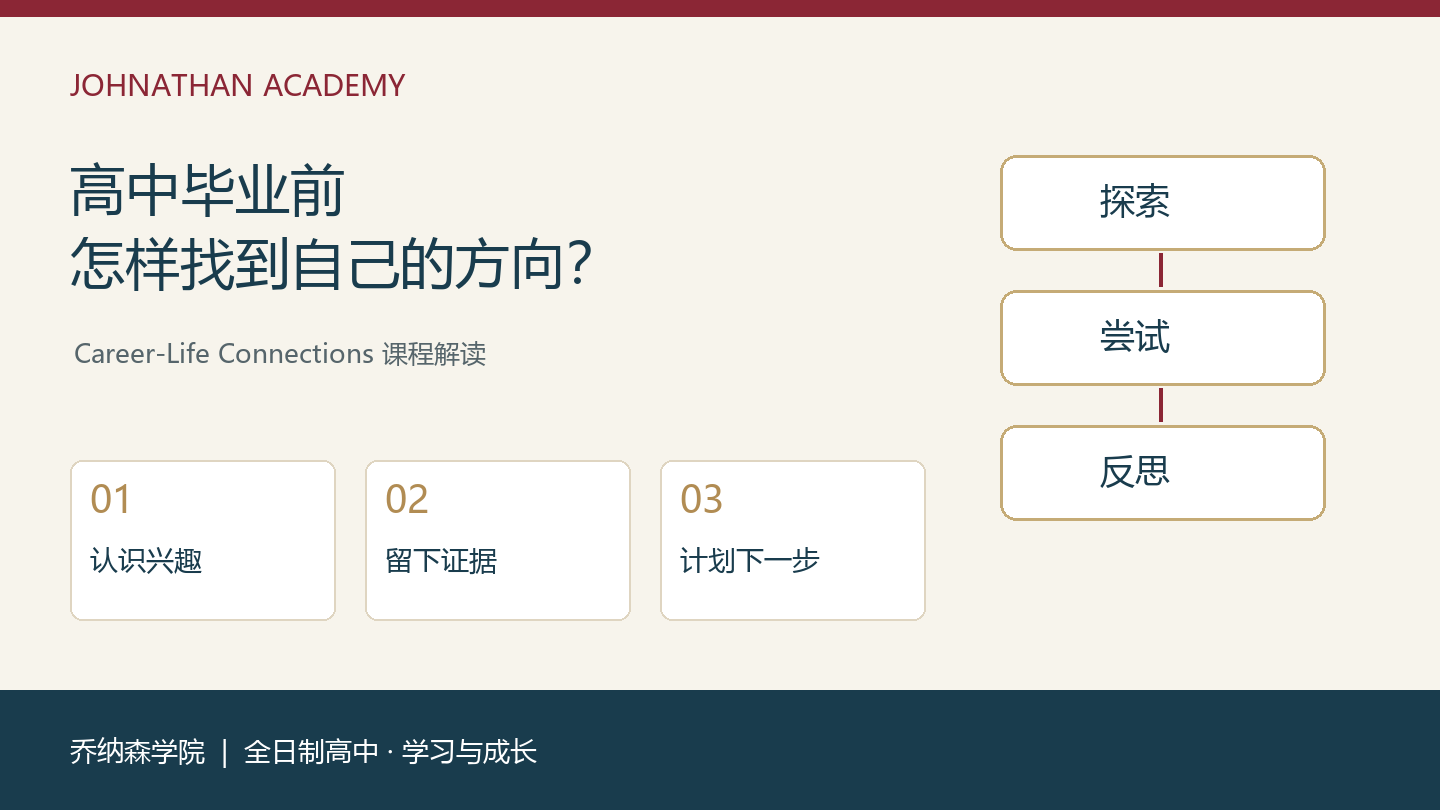
The provincial curriculum connects self-knowledge with possibilities in education, work and life. It emphasizes exploration, planning, reflection and adjustment, and includes a capstone through which students share their learning journey. Read the official curriculum.
This is not an expectation that a teenager choose one occupation for life. Useful questions include: Why does this interest me? What did I learn by trying it? What would I investigate next?
Turn an interest into a question
“I like technology” might lead to exploring design, programming, building or explaining technical ideas. “I enjoy helping people” might mean listening, organizing or solving practical problems. These are illustrative prompts, not accounts of JA students.
An interest becomes easier to explore when the student identifies something specific to investigate.
Keep evidence of learning
A simple reflection framework can help:
- Question: What do I want to understand, and why?
- Action: What appropriate activity could help me investigate it?
- Evidence: What notes, work samples or versions show my learning?
- Reflection: What changed in my understanding, and what would I do next?
These are general learning suggestions. Course teachers determine the actual tasks and acceptable exploration activities. The purpose is to explain growth using evidence, rather than simply list participation.
Discuss the process behind a capstone
Families can ask whether students can explain their choices, show evidence and identify a next step. A revised design or changed interpretation can provide an opening for reflection.
Try asking: Which experience changed your thinking? What would you investigate further? What support or resources would help? Listen to the student’s interpretation before planning the next action together.
This curriculum guide does not report a JA student project or announce a presentation date. Follow school notices and teacher instructions for local arrangements.
Explore a full-time high school environment
Johnathan Academy is a B.C.-certified independent school offering Grades 8–12 with small classes. High school education includes subject learning and the gradual development of self-understanding, responsibility and judgement.
Prospective families are welcome to discuss their child’s grade, courses, interests and goals during a school visit.
Prepared November 2, 2026. The framework and discussion prompts are general educational suggestions, not new school programs.